What is Italian Marble? Why is it World-Famous?
From ItalyItalian marble is natural marble quarried primarily from the Apuan Alps (Alpi Apuane) in Tuscany, Italy — specifically the Carrara, Massa and Versilia regions. This mountain range has been the world's most prestigious marble source for over 2,000 years. Michelangelo chose Carrara marble for his David. The Pantheon in Rome is lined with Carrara. The Taj Mahal's marble was inspired by, and compared to, Italian Carrara.
What makes Italian marble unique is its exceptional mineralogical purity. The Carrara region's marble formed under specific geological conditions that created stone with unusually high calcite content (97%+), extremely fine grain size, natural translucency and the flowing vein patterns that no other marble region in the world replicates at the same quality.
In India, Italian marble has become a symbol of luxury interiors — found in 5-star hotels, premium apartments, corporate headquarters and high-end residences across Mumbai, Delhi, Bengaluru and Hyderabad.
Apuan Alps, Tuscany, Italy — Carrara region primary source
200+ million years — Triassic era limestone metamorphosed under Alpine pressure
97%+ calcium carbonate (calcite) — highest purity of any commercial marble
3 to 4 Mohs — softer than granite but polishes to an unmatched depth and sheen
Imported via Mundra (Gujarat) & JNPT ports → processed in Kishangarh, Rajasthan
₹200 to ₹1,200+/sq ft — see full price table below
Why is Italian Marble More Expensive than Indian Marble?
Shipping from Italy to India adds ₹80-₹150/sq ft in freight, customs duty and handling charges alone.
Carrara region quarries are strictly regulated by Italian authorities. Annual extraction limits keep supply constrained.
Italian marble's vein patterns, translucency and polish depth are genuinely superior to most Indian marble — the premium is partially justified.
2,000+ years of use in world monuments creates perception premium — buyers pay for legacy as much as material.
Italian quarriers use advanced diamond wire cutting technology and seasoned artisans — production cost per slab is higher than Indian quarries.
Genuine Italian slabs are typically larger (280cm × 160cm+) — more wastage per project = higher effective cost per installed sq ft.
All Types of Italian Marble — Complete Reference
12+ VarietiesItalian marble is not a single stone — it is a family of marble varieties, each from different regions of Italy with distinct visual character, pricing and recommended applications. Here is the complete reference:
Statuario Carrara, Tuscany
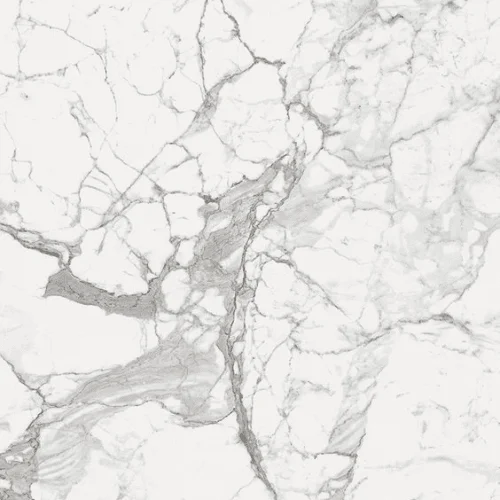
The rarest and most prestigious Italian marble. Brilliant pure white base with bold, dramatic dark grey veining. Named because Michelangelo used it for statuary (sculptures). The veins are more pronounced and striking than Carrara. Used in the world's most luxurious spaces — Burj Al Arab, luxury yacht interiors, presidential suites.
Carrara White Carrara, Tuscany
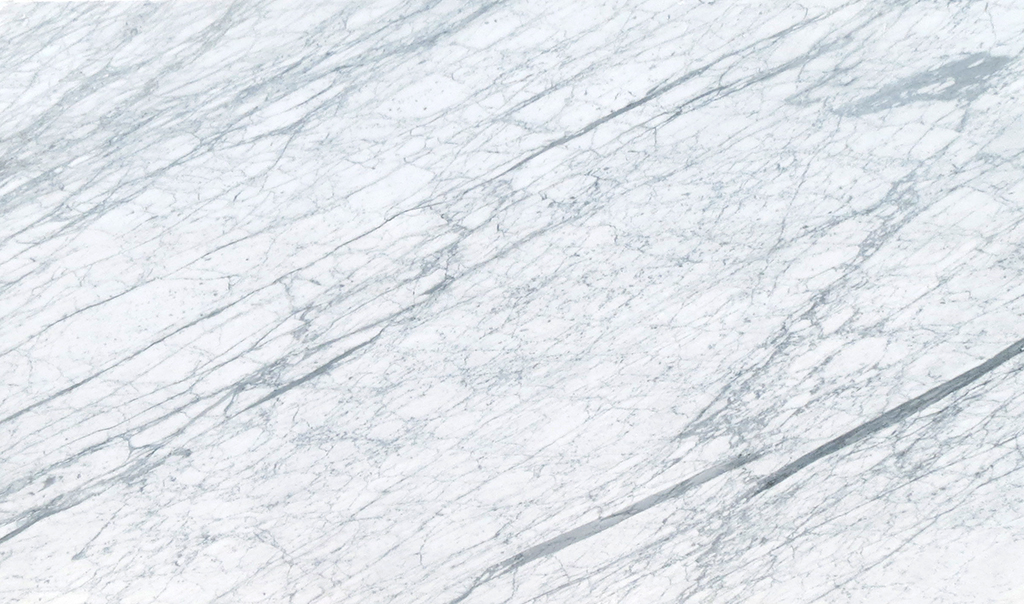
The most widely available Italian marble. Classic white to grey-white background with subtle, feathery grey veining. The original reference for marble elegance. Named after the Carrara mountains — the same quarry used since Roman times. More subtle and calmer than Statuario.
Calacatta Gold Carrara, Tuscany
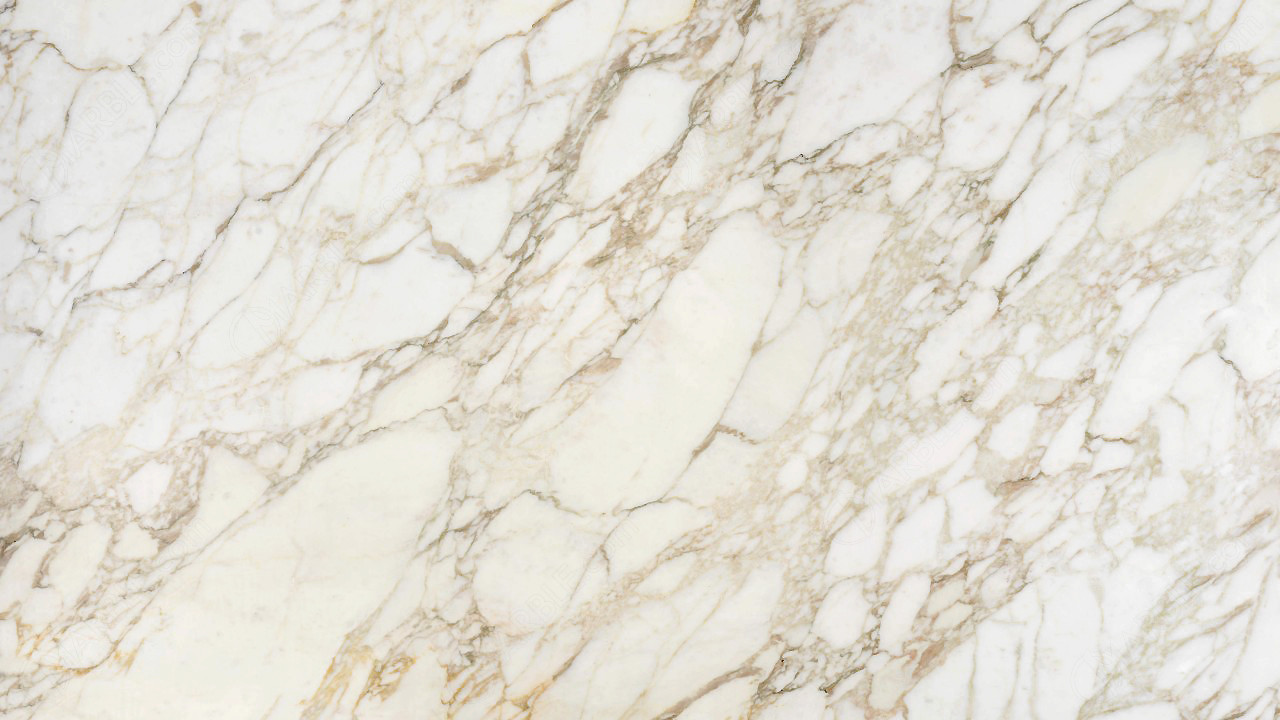
The world's most exclusive Italian marble. Pure bright white base with thick, flowing gold and caramel veining. Rarer than Statuario — true Calacatta Gold is quarried from a single specific zone in the Apuan Alps. The preferred marble for ultra-luxury design worldwide. Frequently featured in architecture magazines and celebrity home reveals.
Botticino Brescia, Lombardy
Warm beige to cream base with subtle brown and grey veining. Named after Botticino Sera village near Brescia. One of Italy's most popular export marbles — widely used in public spaces and commercial flooring across Europe and the Middle East. Warmer and more inviting than white Italian marble.
Nero Marquina Basque Country, Spain
Deep jet black base with thin, brilliant white veining. Technically quarried in Spain (classified as European marble), Nero Marquina is sold and marketed as "Italian marble" across India due to its processing route. The most dramatic dark marble available — creates extraordinary contrast in bathrooms and feature walls.
Emperador Dark Alicante, Spain
Rich dark brown base with cream and gold veining. Originally from Spain, widely classified as Italian/European imported marble in India. Creates a warm, sophisticated atmosphere that pairs beautifully with gold hardware and dark wood interiors. Very popular in high-end restaurant and hotel design.
Crema Marfil Alicante, Spain
Warm ivory-cream marble with very subtle beige and brown veining. One of Spain's most exported marbles, categorised as "Italian/European" in the Indian market. Extremely versatile — suits traditional, contemporary and minimalist interiors equally well. One of the most common choices for hotel lobby flooring globally.
Thassos White Thassos Island, Greece
The purest white marble in the world — quarried from the Greek island of Thassos. More brilliantly white than any Italian marble, Thassos has no grey veining and creates an almost luminous effect. Used in ultra-luxury bathrooms, pool surround and spa installations. Classified as "European imported marble" in India.
Italian Marble Price in India 2026 — Complete Rate List
Updated May 2026All prices below are 2026 import-delivered rates available from Sudarshan Stoneix, Kishangarh — the primary Indian distribution hub for Italian and European marble. These are the same prices marble dealers across India pay before adding their retail markup of 20 to 40%.
| Marble | ₹/sq ft (India) | Origin | Visual Character | Best For |
|---|---|---|---|---|
| Carrara White | ₹200 to ₹350 | Carrara, Italy | White + subtle grey veins | Flooring, bathroom walls |
| Botticino Classico | ₹220 to ₹380 | Brescia, Italy | Warm beige + brown | Hotel floors, living rooms |
| Crema Marfil | ₹200 to ₹380 | Alicante, Spain | Ivory-cream + subtle veins | All rooms, hotel lobby |
| Turkish White (Afyon) | ₹150 to ₹300 | Afyon, Turkey | White + grey | Budget Italian-look flooring |
| Egyptian Galala | ₹180 to ₹320 | Egypt | Cream + light brown | Commercial flooring |
| Marble | ₹/sq ft (India) | Origin | Visual Character | Best For |
|---|---|---|---|---|
| Statuario | ₹300 to ₹600 | Carrara, Italy | Bright white + bold grey | Luxury living room, lobby |
| Nero Marquina | ₹280 to ₹500 | Basque, Spain | Jet black + white veins | Bathroom feature, kitchen |
| Emperador Dark | ₹250 to ₹500 | Alicante, Spain | Dark brown + cream veins | Feature wall, countertop |
| Bianco Lasa | ₹350 to ₹550 | Lasa, Italy | Pure white, very low veining | Premium bathroom, spa |
| Thassos White | ₹350 to ₹600 | Thassos, Greece | Purest white, no veins | Luxury bathroom, pool |
| Marble | ₹/sq ft (India) | Origin | Visual Character | Best For |
|---|---|---|---|---|
| Calacatta Gold | ₹600 to ₹1,200 | Carrara, Italy | Bright white + gold veins | Ultra-luxury, feature walls |
| Calacatta Oro Extra | ₹800 to ₹1,500+ | Carrara, Italy | Thick gold veins, premium slab | Luxury islands, hotel suites |
| Statuario Venato | ₹500 to ₹900 | Carrara, Italy | White + flowing grey veins | Book-matched feature walls |
| Calacatta Viola | ₹700 to ₹1,200 | Carrara, Italy | White + purple-grey veins | Exclusive designer spaces |
All prices are 2026 delivered-to-Kishangarh rates before GST (18%) and transport to your city. City dealer markup adds 25 to 45% on top of these rates. Buy directly from Sudarshan Stoneix to avoid this markup. Request current project pricing →
Carrara Marble — The World's Original Marble
Carrara, TuscanyCarrara marble has been quarried from the Apuan Alps near Carrara, Tuscany since at least 200 BC. The Romans used it for the Pantheon and Trajan's Column. The Renaissance masters — Michelangelo, Donatello, Bernini — carved their masterworks from Carrara stone. Today, the same quarries continue producing the most consistent white marble on earth.
Types of Carrara Marble
Carrara vs Statuario: Both come from the same Carrara region but are different quarry zones. Statuario is rarer, brighter white and has bolder veining — making it more expensive. Carrara is more uniform and subtle. Think of it as Statuario being the premium, Carrara being the classic version.
Statuario Marble — Italy's Most Prestigious Stone
Rarest Italian Marble
Statuario is quarried from the highest-elevation zones of the Carrara mountains — areas where geological conditions created marble with exceptional whiteness and the most dramatic vein formations. Michelangelo specifically preferred Statuario for sculpture because its whiteness and fine grain allow carving of extraordinary detail. The name literally means "for statues."
Types of Statuario Marble
Calacatta Marble — The World's Most Exclusive White Marble
Ultra LuxuryCalacatta marble is the most exclusive and expensive Italian marble. While Carrara and Statuario are relatively abundant, true Calacatta comes from only a few specific quarry veins in the highest parts of the Apuan Alps. The gold and caramel-toned veining is created by iron oxide minerals that formed during metamorphosis — these veins are thicker, more dramatic and more sparsely distributed than in Carrara or Statuario.
In India, Calacatta Gold is the most demanded ultra-luxury stone for premium apartments in Mumbai and Delhi. A single book-matched slab wall of genuine Calacatta Gold can cost ₹3,00,000 to ₹5,00,000 or more.
Due to Calacatta's high price, the Indian market is flooded with Chinese white marble (from Hunan province), Indian Morwad marble and machine-printed vitrified tiles all marketed as "Calacatta." We estimate over 60% of what is sold as Calacatta Gold in India is not genuine. Read our fake detection guide →
Calacatta vs Statuario — Key Difference
Both are premium white Italian marble from Carrara. The difference: Statuario has grey veins — Calacatta has gold/brown veins. Calacatta is always more expensive. Calacatta also tends to have a brighter, more intensely white base than Statuario. If the "Calacatta" you are being shown has grey veins, it is Statuario — or more likely, neither.
Italian Marble vs Indian Marble — Honest Comparison
No Brand BiasThis is the question every Indian homeowner asks — and most guides are biased toward one answer. Here is the complete truth from a supplier who sells both:
| Factor | 🇮🇹 Italian Marble | 🇮🇳 Indian Marble (Premium) | Verdict |
|---|---|---|---|
| Vein Aesthetics | Exceptional — flowing, organic patterns unmatched globally | Good — Indian varieties like Rainforest, Banswara have character | Italian |
| Price | ₹200 to ₹1,200/sq ft in India | ₹40 to ₹450/sq ft — 60-75% more affordable | Indian |
| Durability | Both marble types have similar hardness (3-4 Mohs) | Both marble types have similar hardness (3-4 Mohs) | Equal |
| Maintenance | High — acid sensitive, needs frequent sealing, professional polishing | Same care needed but more local expertise available | Indian |
| Prestige Perception | Very high — Italian marble signals luxury universally | High — Makrana marble has unique heritage value | Italian |
| Availability Consistency | Depends on import; lot variation between shipments | Local quarries — easier to reorder matching lots | Indian |
| Best White Option | Calacatta/Statuario — no Indian equivalent for these vein patterns | Makrana, Morwad — prestigious but different aesthetic | Italian |
| Value for Money | For premium projects where aesthetics justify cost: Yes | For most Indian homes: Indian marble offers better value | Indian |
Expert Verdict: When Does Italian Marble Justify the Premium?
- The design specifically requires Calacatta Gold or Statuario veining — Indian marble cannot replicate it
- The space is a luxury hotel, premium showroom or high-end residential lobby where Italian marble signals brand positioning
- Budget is genuinely not the constraint and you want the absolute best
- The application is kitchen flooring, outdoor or children's rooms — Indian granite handles this better at a fraction of the cost
- Premium Indian marble (Makrana, Morwad White) can achieve the desired look at 60% lower price
- The space has children or pets — maintenance demands of Italian marble are too high for busy households
See full Indian marble price guide → | Granite vs Marble complete comparison →
Italian Marble for Indian Homes — Room-wise Recommendations
Room GuideLiving Room
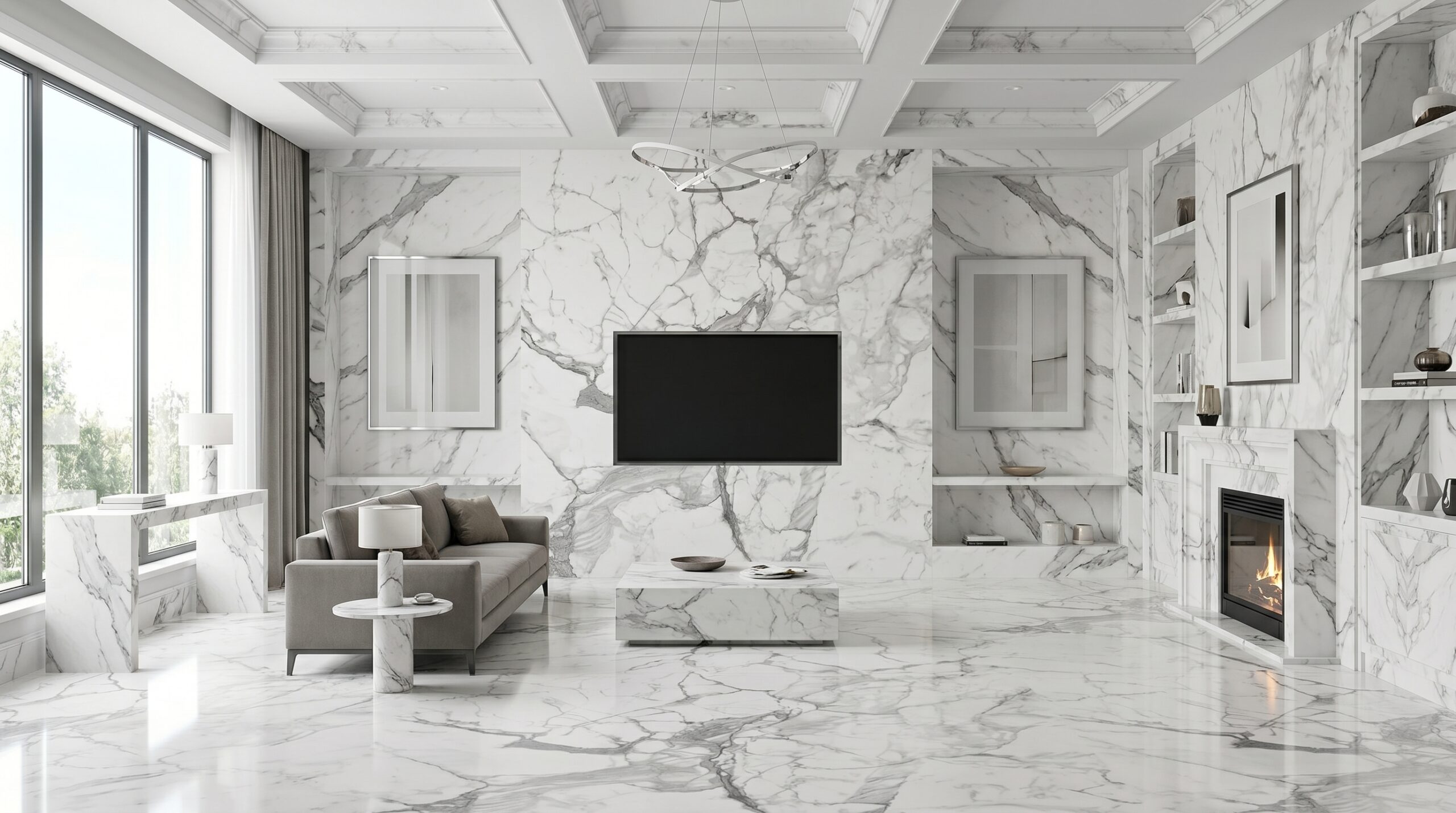
Italian marble creates an extraordinary first impression in living rooms. Large slab format (1200mm×600mm or larger) with minimal grout lines creates a seamless luxury look.
Use 18mm thickness minimum. Seal before grouting and again 30 days after installation.
Bathroom
Italian marble bathrooms are the most photographed interiors on design platforms. Wall-to-floor matching with book-matched slabs creates the signature luxury hotel aesthetic.
Use honed finish on bathroom floors. Seal every 6 months in wet areas.
Kitchen
Italian marble in Indian kitchens requires careful consideration. It is beautiful but vulnerable to acidic Indian cooking ingredients. Best used for island tops in show kitchens rather than daily cooking areas.
Pooja Room
White Italian marble has deep resonance in sacred Indian spaces — connecting to the tradition of Makrana marble in temples. Bianco Carrara or Statuario creates a luminous, spiritually appropriate environment.
Commercial / Hotel
Italian marble is the standard for 5-star hotels and premium commercial spaces. Large format slabs book-matched on walls and floors create the signature luxury hotel look.
Bedroom
Italian marble in bedrooms creates the coolest, most luxurious sleeping environment. The natural cooling effect of marble is especially pleasant in India's warm climate.
How to Identify Fake Italian Marble — The Complete Fraud Detection Guide
Critical — Read Before BuyingThe Indian marble market has a serious fraud problem. Our estimate is that 40 to 60% of marble sold as "Italian" in India is not Italian. Chinese marble (Hunan White), machine-printed vitrified tiles and low-grade Indian marble are all marketed as Italian marble by dishonest dealers. Here is how to protect yourself:
🔍 9 Tests to Identify Genuine Italian Marble
Ask for the import documents — Bill of Entry, Certificate of Origin from an Italian chamber of commerce. Genuine Italian marble will have traceable import documentation. No certificate = high risk of fake.
Apply a few drops of lemon juice (citric acid) to the back of the slab. Genuine marble (Italian or Indian) will fizz and etch — this is calcium carbonate reacting to acid. If there is no reaction, it is NOT marble — it may be a sintered stone or porcelain tile.
Hold a thin slab (15mm) against a bright light source. High-quality Italian marble like Statuario and Calacatta has remarkable translucency — light passes through with a warm glow. Chinese marble and Indian Morwad are more opaque. This test is not definitive but is a strong indicator.
Genuine Italian marble veins are organic and irregular — they change direction, vary in thickness and have secondary micro-vein networks. Fake Chinese marble and vitrified tiles have suspiciously perfect, symmetrical or repeating vein patterns. If every slab looks identical, it is almost certainly not natural stone.
Italian marble weighs approximately 2,700 kg/m³. A standard 600×600mm×18mm tile weighs approximately 17.5 kg. Porcelain tiles weigh 20 to 25% less. If you can easily lift a full slab that should be heavy, it may be sintered stone or vitrified tile with a marble surface print.
Genuine Italian Carrara marble cannot be sold below ₹200/sq ft in India — import freight, customs (10% BCD + 18% GST) and handling alone prevent this. If someone offers you "Italian Statuario" at ₹100/sq ft, it is physically impossible for it to be genuine. Walk away.
Genuine Italian marble has a rough, natural back surface (saw-cut stone texture). Chinese vitrified tiles marketed as marble have a completely smooth, fired ceramic back with a mesh or grid embossment. Turn the slab over — if you see a uniform smooth ceramic back, it is NOT natural stone.
Pour 5-6 drops of water on an unpolished area. Italian marble will slowly absorb water (within 2 to 4 minutes). Vitrified tiles will NOT absorb water at all — it will sit as a perfect droplet. If water sits for 10+ minutes without any absorption, it is vitrified tile, not marble.
Scratch the unpolished back of the slab with a steel key or knife. Genuine marble (3-4 Mohs) scratches fairly easily — you will see a white powder forming. If the surface is extremely hard and does not scratch (vitrified tiles are 6-7 Mohs), it is not marble. Note: this test ruins a small area so use only on the hidden back surface.
All Italian marble supplied by Sudarshan Stoneix comes with import documentation (Bill of Entry) traceable to the original Italian or European quarry. We also provide material test certificates on request. You can verify the import shipment independently through ICEGATE (Indian customs portal) using the Bill of Entry number.
Italian Marble Maintenance Guide for Indian Homes
Care ScheduleItalian marble requires more careful maintenance than granite — but less than most people fear if you follow the right routine. The key is prevention: sealing before enemies (acids, oils, dyes) reach the stone.
Daily Routine
- Wipe spills immediately — especially lemon, vinegar, tamarind, wine, coffee. These permanently etch unsealed marble within 60 seconds.
- Use only a damp microfibre cloth with pH-neutral (7.0) cleaner — never acidic or alkaline products.
- Dry buff after wet cleaning to avoid water marks.
- Never use: Harpic, bleach, vinegar, lemon-based cleaners, dish soap directly on marble.
Monthly & Quarterly
- Use a dedicated Italian marble polish spray monthly to restore surface sheen.
- Inspect for etch marks — dull patches where acid has eaten the polish. Minor etches can be buffed out with a marble polishing pad.
- Check grout lines and edge junctions for cracking — marble expands differently than grout in Indian temperature cycles.
- Re-seal every 6 months in kitchens, bathrooms and high-traffic areas.
Annual Professional Care
- Professional polishing (grinding + chemical polish) every 3 to 5 years in living areas — more frequently in high traffic zones.
- Cost: ₹18,000 to ₹35,000 for 1,000 sq ft depending on stone condition and city.
- Lippage correction (leveling uneven tiles) if needed — done during professional polishing.
- Deep sealing with professional-grade penetrating sealer after each polishing session.
Indian kitchen reality check: The most common maintenance failure with Italian marble in Indian homes is turmeric staining and lemon/tamarind etching in kitchens. Both cause permanent dull patches that require professional diamond polishing to remove. For working Indian kitchens with heavy cooking, we recommend Italian marble only for flooring (not countertops) or using granite countertops alongside marble flooring. Kitchen stone guide →
How to Buy Italian Marble in India — Complete Guide
Kishangarh RouteHow Italian Marble Reaches India
Carrara, Brescia, Alicante — raw blocks extracted and processed into slabs in country of origin
Mundra (Gujarat) — the primary arrival port for European marble to India. JNPT (Maharashtra) secondary
Slabs transported to Kishangarh for custom cutting, edge profiling and distribution. Sudarshan Stoneix operates here.
Buy from Sudarshan Stoneix at import-level pricing. Skip the dealer markup.
Italian Marble Buying Checklist
- Request the Bill of Entry (Indian customs document) — this proves the stone was actually imported. Verify on ICEGATE portal if in doubt.
- Ask for slab thickness certificate — standard Italian marble is 18mm to 20mm. Below 15mm is too thin for flooring.
- Request a slab video call before balance payment — you need to see the actual vein pattern, not a stock photo. All slabs are unique.
- Order 10 to 15% extra — Italian marble has more wastage due to large vein-matching requirements.
- Never pay full amount upfront — standard is 30-40% advance, balance before dispatch after video verification.
- Confirm the lot is sufficient for your entire project — do not mix different import lots in one room (color varies).
- Ensure wooden crate packaging — Italian marble slabs are fragile and must be A-frame crated with foam padding for Indian road transport.
Italian Marble FAQs — Every Question Answered
What is the price of Italian marble in India in 2026?
Italian marble price in India in 2026 ranges from ₹200 to ₹1,200+ per square foot depending on type and grade. Entry Italian marble (Carrara White, Crema Marfil, Botticino) starts at ₹200 to ₹380/sq ft. Premium varieties (Statuario, Nero Marquina, Emperador Dark) range from ₹250 to ₹600/sq ft. Luxury varieties (Calacatta Gold, Thassos White) cost ₹600 to ₹1,200+ per sq ft. These are 2026 import-to-Kishangarh rates before GST (18%) and transport. City dealers typically add 25 to 45% on top of these rates. Sudarshan Stoneix supplies Italian marble at these import-direct rates.
What are the types of Italian marble available in India?
The major Italian and European marble types available in India are: White: Carrara White (₹200-₹350), Statuario (₹300-₹600), Bianco Lasa (₹350-₹550), Thassos White-Greek (₹350-₹600). White-Gold: Calacatta Gold (₹600-₹1,200), Calacatta Oro Extra (₹800-₹1,500+). Cream/Beige: Botticino (₹220-₹380), Crema Marfil-Spanish (₹200-₹380). Dark: Nero Marquina-Spanish (₹280-₹500), Emperador Dark-Spanish (₹250-₹500), Grey William (₹280-₹450). All available from Sudarshan Stoneix, Kishangarh. View full collection →
What is the difference between Carrara, Statuario and Calacatta marble?
All three come from the Carrara region of Italy but differ significantly: Carrara — white to grey-white background with subtle, feathery grey veins. Most abundant and affordable (₹200-₹350). The classic Italian marble. Statuario — brighter white base with bolder, more dramatic grey veining. Rarer and more expensive (₹300-₹600). Named for its use in sculptures. Calacatta — brightest white base with thick, dramatic gold/caramel veining (not grey). Rarest and most expensive (₹600-₹1,200+). The most prestigious marble in the world. If the veins are grey → Carrara or Statuario. If the veins are gold → Calacatta. If someone sells you "Calacatta" with grey veins, it is either mislabelled Statuario or fake.
How do I identify real Italian marble vs fake in India?
The most reliable tests: (1) Certificate test — ask for the Bill of Entry (Indian customs import document). No certificate = high risk. (2) Acid test — lemon juice on back should fizz and etch. No reaction = not marble. (3) Pattern test — genuine marble veins are organic and irregular. If all slabs look identical or perfectly symmetrical, likely vitrified tile or printed stone. (4) Price test — genuine Carrara cannot be below ₹200/sq ft in India. (5) Back surface test — genuine marble has rough saw-cut stone back. Ceramic tiles have smooth fired back with grid embossment. Read our full 9-point fake detection guide →
Is Italian marble better than Indian marble?
Italian marble has superior vein aesthetics and a higher prestige perception — making it better for luxury projects where appearance is the primary driver. However, Italian marble is NOT better than Indian marble for: (1) Kitchen countertops — acid sensitivity makes Italian marble impractical for Indian cooking. (2) Outdoor use — Italian marble cannot be used outdoors. (3) Value for money — premium Indian marble (Makrana, Morwad, Banswara) delivers similar aesthetics at 50 to 70% lower cost. The right choice depends entirely on your specific application, budget and aesthetic priority. Full comparison →
How to clean and maintain Italian marble at home?
Italian marble maintenance: Daily — clean with damp microfibre and pH-neutral cleaner only. Wipe spills immediately, especially acidic substances (lemon, tamarind, vinegar, wine). Never use vinegar, bleach or regular household cleaners. Quarterly — re-seal with penetrating stone sealer (₹1,500 to ₹3,000 for 1,000 sq ft). Every 3 to 5 years — professional diamond grinding and polishing to remove etch marks and restore mirror shine (₹18,000 to ₹35,000 for 1,000 sq ft in major cities). Bathroom Italian marble needs sealing every 6 months due to moisture exposure.
What is the total cost of Italian marble flooring for 1,000 sq ft?
Total cost for Italian marble flooring for 1,000 sq ft (2026 estimates): Entry Italian (Carrara/Botticino at ₹280/sq ft): Material ₹3,24,800 (1,160 sqft × ₹280) + installation ₹80,000 + polish ₹25,000 = ~₹4,30,000. Premium Italian (Statuario at ₹400/sq ft): Material ₹4,64,000 + installation ₹90,000 + polish ₹25,000 = ~₹5,79,000. Plus recurring polishing every 3-5 years at ₹25,000 to ₹35,000. Buy directly from Sudarshan Stoneix to save 25-35% on material cost versus city dealers.
इटैलियन मार्बल की कीमत क्या है? (Italian marble price India 2026)
भारत में 2026 में इटैलियन मार्बल की कीमत: एंट्री रेंज (Carrara White, Crema Marfil) ₹200 से ₹380/sqft। प्रीमियम रेंज (Statuario, Nero Marquina) ₹280 से ₹600/sqft। लग्जरी (Calacatta Gold) ₹600 से ₹1,200+/sqft। ये किशनगढ़ इम्पोर्ट रेट हैं — आपके शहर के डीलर इन पर 25-45% मार्जिन जोड़कर बेचते हैं। सुदर्शन स्टोनिक्स से डायरेक्ट खरीदें और बचाएं। इम्पोर्टेड मार्बल देखें →
असली इटैलियन मार्बल की पहचान कैसे करें? (How to identify real Italian marble)
असली इटैलियन मार्बल की पहचान के 5 तरीके: (1) बिल ऑफ एंट्री मांगें — इम्पोर्ट डॉक्यूमेंट होना चाहिए। (2) नींबू टेस्ट — पत्थर के पीछे नींबू लगाएं, अगर झाग आए तो असली मार्बल। नहीं आए तो विट्रीफाइड टाइल। (3) नसों का पैटर्न — असली मार्बल की नसें अनियमित और प्राकृतिक होती हैं। सभी स्लैब एक जैसी हों तो नकली। (4) कीमत सेनिटी — Carrara ₹200 से कम में नहीं मिल सकता। (5) पीछे की सतह — असली मार्बल की पीठ खुरदरी होती है। नकली टाइल की पीठ चिकनी सिरेमिक। पूरी 9-पॉइंट गाइड पढ़ें →
Statuario और Calacatta मार्बल में क्या फर्क है?
दोनों इटली के Carrara क्षेत्र से आते हैं लेकिन फर्क है: Statuario — सफेद बेस पर गहरी grey (ग्रे) नसें। कीमत ₹300 से ₹600/sqft। Calacatta — सफेद बेस पर मोटी golden/caramel (सोने जैसी) नसें। कीमत ₹600 से ₹1,200+/sqft। सबसे आसान पहचान: अगर नसें ग्रे हैं = Statuario। अगर नसें सोने जैसी या भूरी हैं = Calacatta। अगर कोई ग्रे नसों वाला पत्थर "Calacatta" कह के बेच रहा है — वो या तो गलत बता रहा है या नकली बेच रहा है। Calacatta की grey नसें नहीं होतीं।
Buy Genuine Italian Marble — Import Direct from Kishangarh
Sudarshan Stoneix supplies certified Italian marble with full import documentation (Bill of Entry traceable on ICEGATE) at import-direct pricing — 25 to 40% cheaper than city dealers. Pan-India delivery with wooden crate packaging.
- All Italian varieties — Carrara, Statuario, Calacatta, Botticino, Nero Marquina
- Full import certification — Bill of Entry provided with every order
- Custom cut-to-size available — send your project dimensions
- Pan India delivery with A-frame wooden crate packaging
- Video verification before dispatch — see your exact slab lot
- Starting at ₹200/sq ft — entry Italian marble