
Practical buyer comparison for Indian homes
Italian Marble vs Indian Marble: Which Is Better for Your Home?
Compare appearance, real-world performance, indicative prices, maintenance and best room use. The right answer is not “Italian is always better” or “Indian is always affordable”—it depends on the specific slab, application and budget.
Start with correct terminology
What is the actual difference?
Origin-specific natural stone from Italy
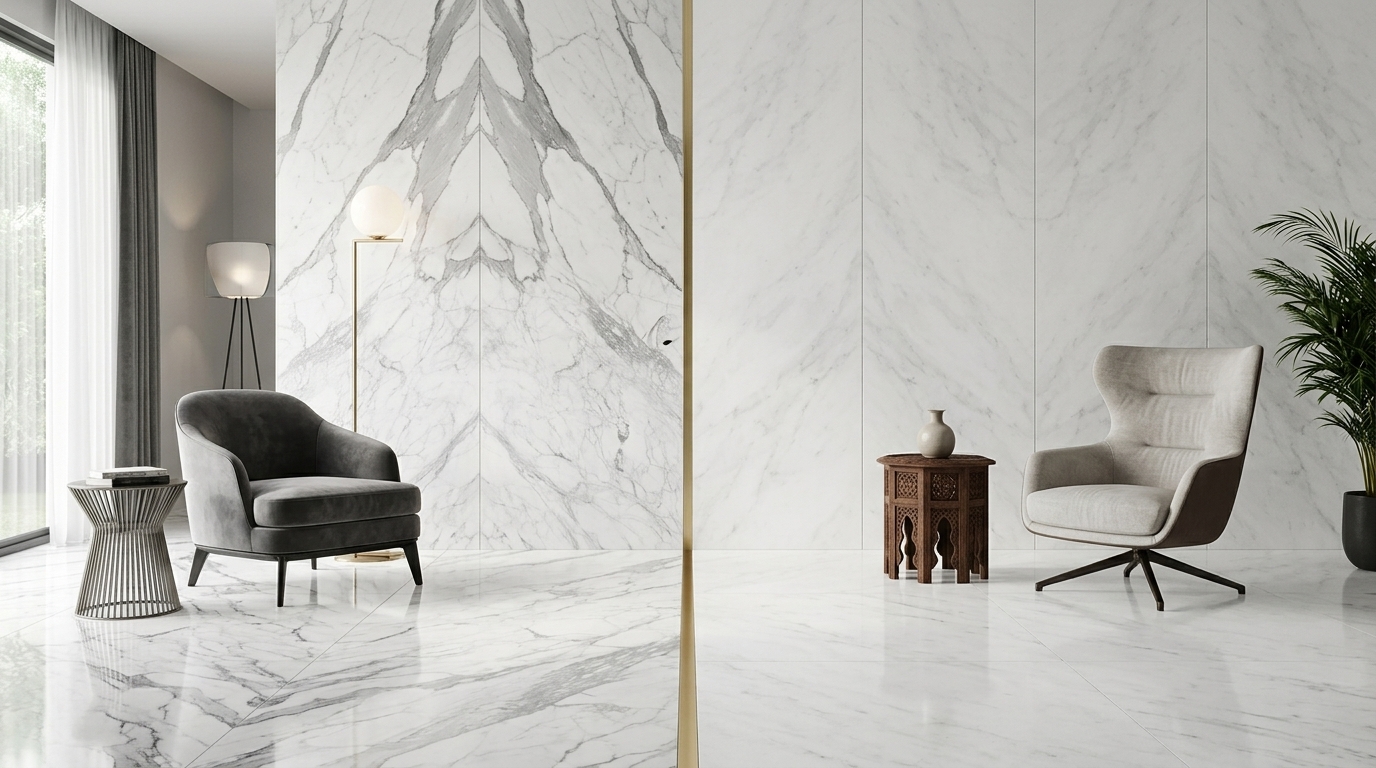
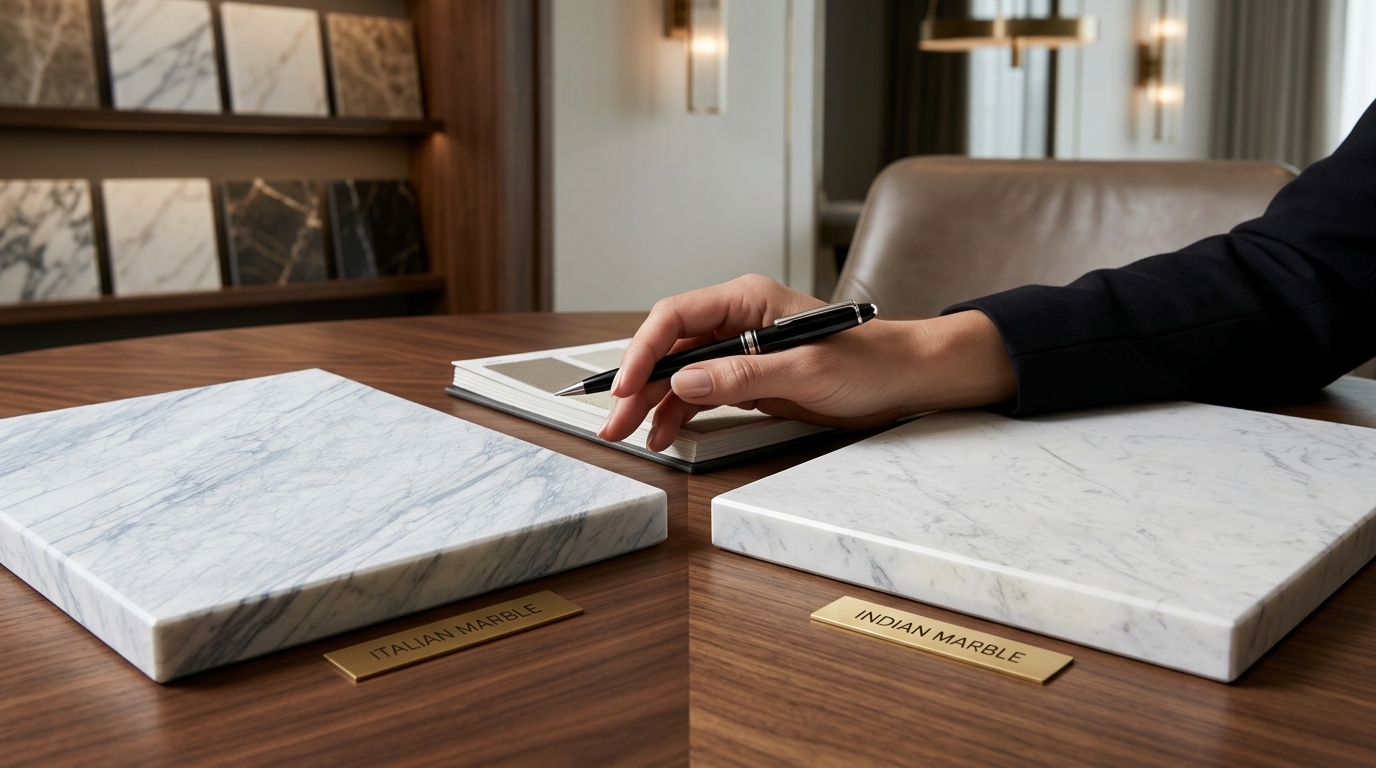
Italian marble is quarried in Italy. Well-known families include Carrara, Statuario, Calacatta, Botticino and Bianco Lasa. Buyers usually choose it for distinctive veining, premium slab selection and a recognised luxury aesthetic.
Important: visual quality varies from block to block. Country of origin does not replace slab inspection.
Natural marble quarried in India
Indian marble includes white, beige, pink, green and patterned stones from regions such as Makrana, Rajsamand, Banswara and other quarry belts. It offers a wider local supply chain and can be easier to match for large projects.
Makrana is especially valued for white marble applications, heritage work and pooja or temple projects.
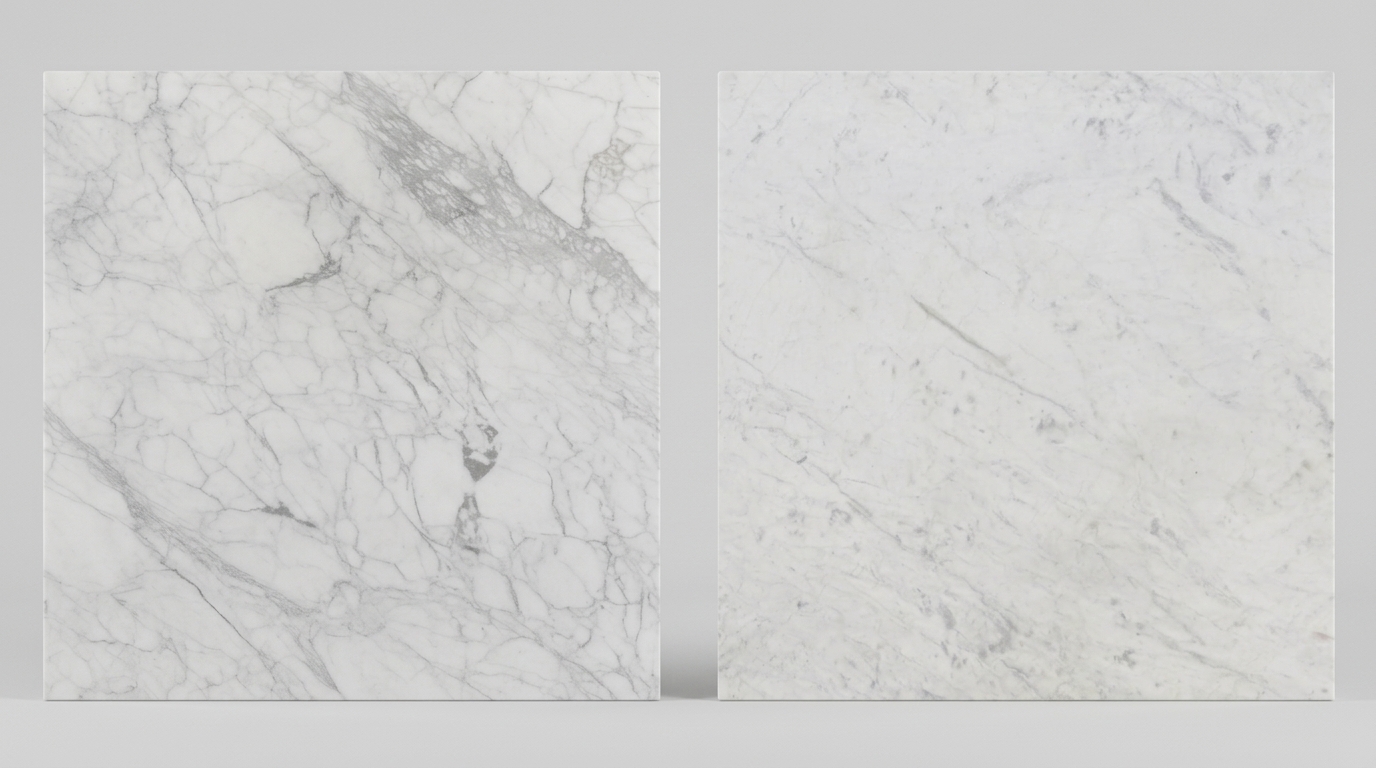
Compare full slabs from the same lot. Small samples can hide fissures, colour shifts and vein density.
Decision table
Italian vs Indian marble at a glance
| Factor | Italian marble | Indian marble | Practical winner |
|---|---|---|---|
| Visual character | Known for premium white backgrounds and dramatic grey, gold or flowing veins. | Ranges from subtle whites to beige, pink, green and distinctive local patterns. | Depends on design |
| Material price | Usually higher because of origin, grade, freight, import handling and demand. | Usually more economical, with options from entry to premium grades. | Indian |
| Availability in India | Stock depends on imported lots; an exact replacement may be difficult later. | Local quarry and processing supply often makes replenishment faster. | Indian |
| Durability | Varies by stone, fissures, thickness, reinforcement, finish and installation. | Also varies by stone and grade; some dense Indian marbles perform very well. | Test the slab |
| Maintenance | Acid-sensitive like other calcareous stone; requires suitable cleaning and care. | Also acid-sensitive; local repair and repolishing support may be easier to find. | Indian, slightly |
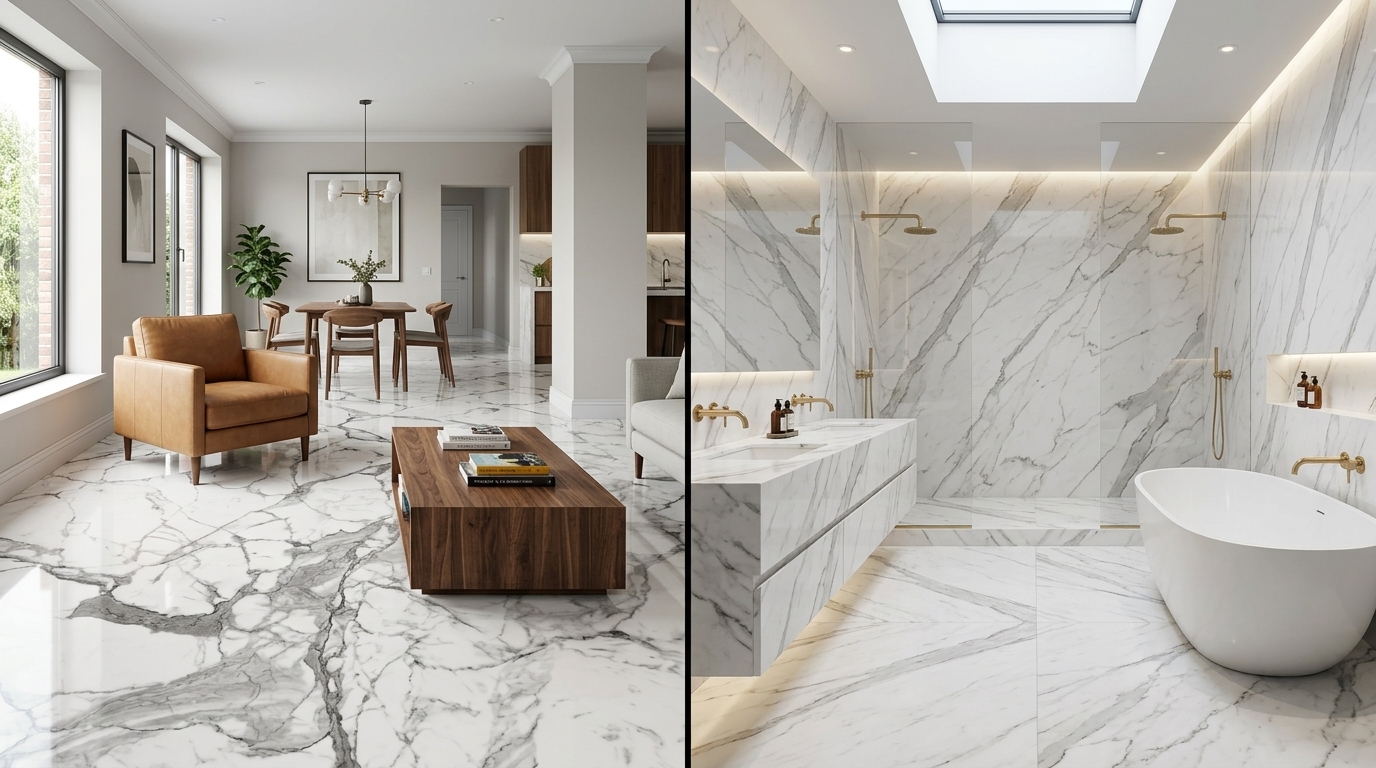
| Prestige aesthetic | Strong fit for luxury bathrooms, feature walls, lobbies and statement flooring. | Strong fit for refined homes, temples, large flooring areas and value-led projects. | Italian for luxury |
| Large-area matching | Reserve the full lot; future lots can differ significantly. | Often easier to source larger matching quantities, but lot reservation still matters. | Indian |
The most reliable comparison is not “Italy vs India”; it is specific slab vs specific slab, with the same thickness, finish, grade and application.
Indicative Kishangarh material ranges
Italian marble vs Indian marble price
Typical material range
₹40 to ₹450+ per sq ft
- Entry white and beige varieties: often around ₹40–₹130
- Banswara and other mid-range options: often around ₹80–₹200
- Premium Makrana selections: often around ₹120–₹450+
Typical material range
₹200 to ₹1,500+ per sq ft
- Carrara and Botticino selections: often around ₹200–₹400
- Statuario selections: often around ₹300–₹900+
- Calacatta and rare premium lots: often around ₹600–₹1,500+
See the separate marble stone price in India guide for broader Indian and imported marble ranges.
Performance and maintenance
Is Italian marble stronger or more durable?
There is no safe rule that all Italian marble is stronger than all Indian marble—or the reverse. Marble can be calcitic or dolomitic, and physical performance changes by quarry, block, grain structure, natural fissures, thickness, reinforcement and installation quality. Ask for technical data where performance is critical, and review the practical differences in our granite vs marble flooring guide.
Acid sensitivity
Marble is a calcareous stone. Lemon, vinegar, tamarind and acidic cleaners can dull or etch the surface. Sealer improves stain resistance but does not make marble acid-proof.
Stains and scratches
Oil, colourants and spills can penetrate some stones. Surface finish and porosity matter. Test the exact sample with the products used in your home.
Installation quality
Correct substrate, waterproofing, adhesive, joint planning, curing, polishing and movement accommodation often matter more than nationality.
Simple care routine
- Use a soft cloth or mop and a pH-neutral stone cleaner.
- Blot spills quickly; do not scrub acidic spills across the surface.
- Avoid vinegar, lemon-based cleaners, toilet cleaners and abrasive powders.
- Use mats at entrances and coasters or trays in spill-prone areas.
- Ask the supplier whether the chosen stone and finish need an impregnating sealer.
Stain resistance is not acid resistance
An impregnating sealer can slow the absorption of some liquids and make cleanup easier. It does not create an acid-proof coating, and it cannot stop lemon or vinegar from reacting with a polished marble surface.
Test cleaners and sealers on an offcut or hidden area before treating the full installation.
Application guide
Which marble is better for each room?
For exterior use, wet areas, high traffic or structural applications, confirm suitability with the supplier, architect and installer for the exact stone and finish.
Avoid expensive buying mistakes
Eight checks before you approve any marble lot
Before visiting a supplier or placing a remote order, use our Kishangarh granite and marble buying guide to understand sourcing, lot approval, transport and factory-direct buying.
- Confirm the exact originAsk for the commercial name, country, quarry or source information and import documentation where relevant.
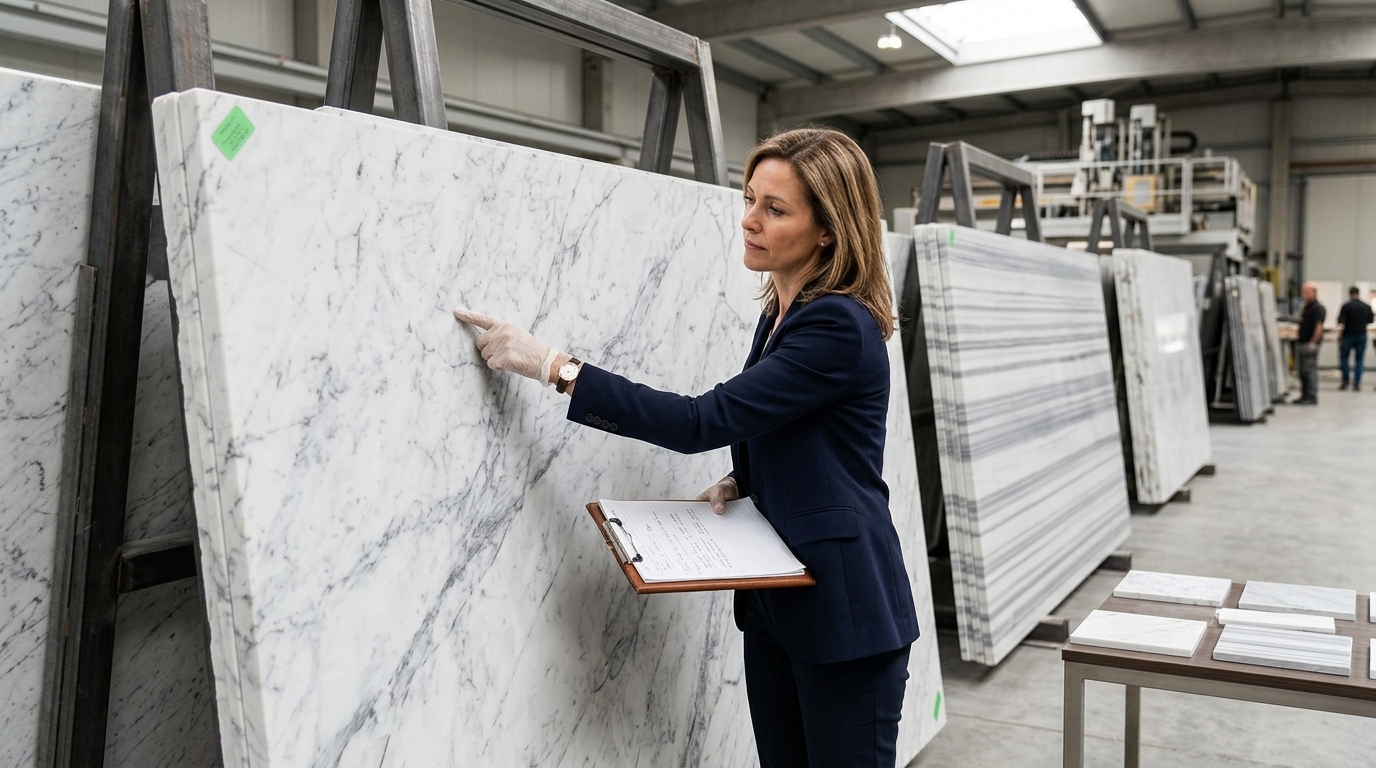
- Inspect full slabsReview high-resolution photos or a live video of every slab, not only a small polished sample.
- Check thicknessMeasure actual thickness at multiple points and compare it with the quotation and application requirement.
- Look for reinforcementAsk about resin, epoxy filling, mesh backing, repaired fissures and whether they affect cutting or installation.
- Reserve one batchApprove and tag the full quantity, including wastage and future replacement pieces, before dispatch.
- Compare finish and shadePolished, honed, leathered and brushed surfaces can change colour, grip and maintenance behaviour.
- Calculate landed costAdd GST, freight, unloading, wastage, laying, polishing, skirting and sealing—not just the slab rate.
- Get installer approvalHave the installer confirm substrate, adhesive, joint layout, waterproofing and handling before ordering.
Final decision
Which one should you choose?
For most Indian homeowners, a carefully selected premium Indian marble is the practical value choice. Italian marble is worth the premium when its specific veining, colour or luxury positioning is central to the design—not simply because the dealer calls it “Italian”.
Choose Italian marble when
- You specifically want Carrara, Statuario, Calacatta or another verified Italian stone.
- The project needs a high-impact feature wall, master bathroom, lobby or premium hospitality aesthetic.
- You can reserve the complete lot and accept higher landed and replacement costs.
Choose Indian marble when
- You need a strong balance of appearance, availability and budget.
- The project covers a large floor area or may need matching material later.
- You want Makrana, Banswara, Morwad or another distinctly Indian look.
Common buyer questions
Italian vs Indian marble FAQs
Which is better: Italian marble or Indian marble?
Italian marble is often chosen for distinctive premium veining; Indian marble is often chosen for value, local availability and easier batch sourcing. The better option depends on the exact slab, room, maintenance expectations and total project budget.
Is Italian marble more durable than Indian marble?
Not automatically. Strength, absorption and soundness vary by the specific stone, quarry, block, thickness, fissures, reinforcement and installation. Compare technical data and inspect the actual lot rather than using nationality as a durability grade.
What is the price difference between Italian and Indian marble?
As a broad July 2026 material reference, Indian marble can range from about ₹40 to ₹450+ per sq ft, while Italian marble can range from about ₹200 to ₹1,500+ per sq ft. Exact prices depend heavily on variety, grade, thickness, finish and slab selection.
Is all imported marble Italian?
No. Imported marble may come from Italy, Spain, Greece, Turkey, Vietnam, Oman, Egypt and many other countries. Ask for the exact stone name and country of origin.
Which marble is better for an Indian kitchen?
For a heavily used kitchen countertop, marble can etch from lemon, vinegar, tamarind and other acidic ingredients. Granite or a suitable quartzite is usually more practical. Marble may still be used for flooring or decorative areas with appropriate care.
How can I identify genuine Italian marble?
Verify the exact commercial name and origin, inspect the complete slab lot, ask for relevant import and invoice documentation, review the back and edge, and avoid relying on colour or price alone. Natural stone patterns vary, so identical repeated patterns may indicate a manufactured surface rather than natural marble.
Sources and methodology
This guide combines Sudarshan Stoneix market observations with established natural-stone care guidance. Price ranges are indicative and should be replaced by a dated lot-specific quotation before purchase.
Compare actual slabs before ordering
Get a lot-specific recommendation and landed-cost quote
Share your city, room, approximate square footage, preferred colour and budget. The team can suggest suitable Indian and imported marble options and show available lots by photo or video.