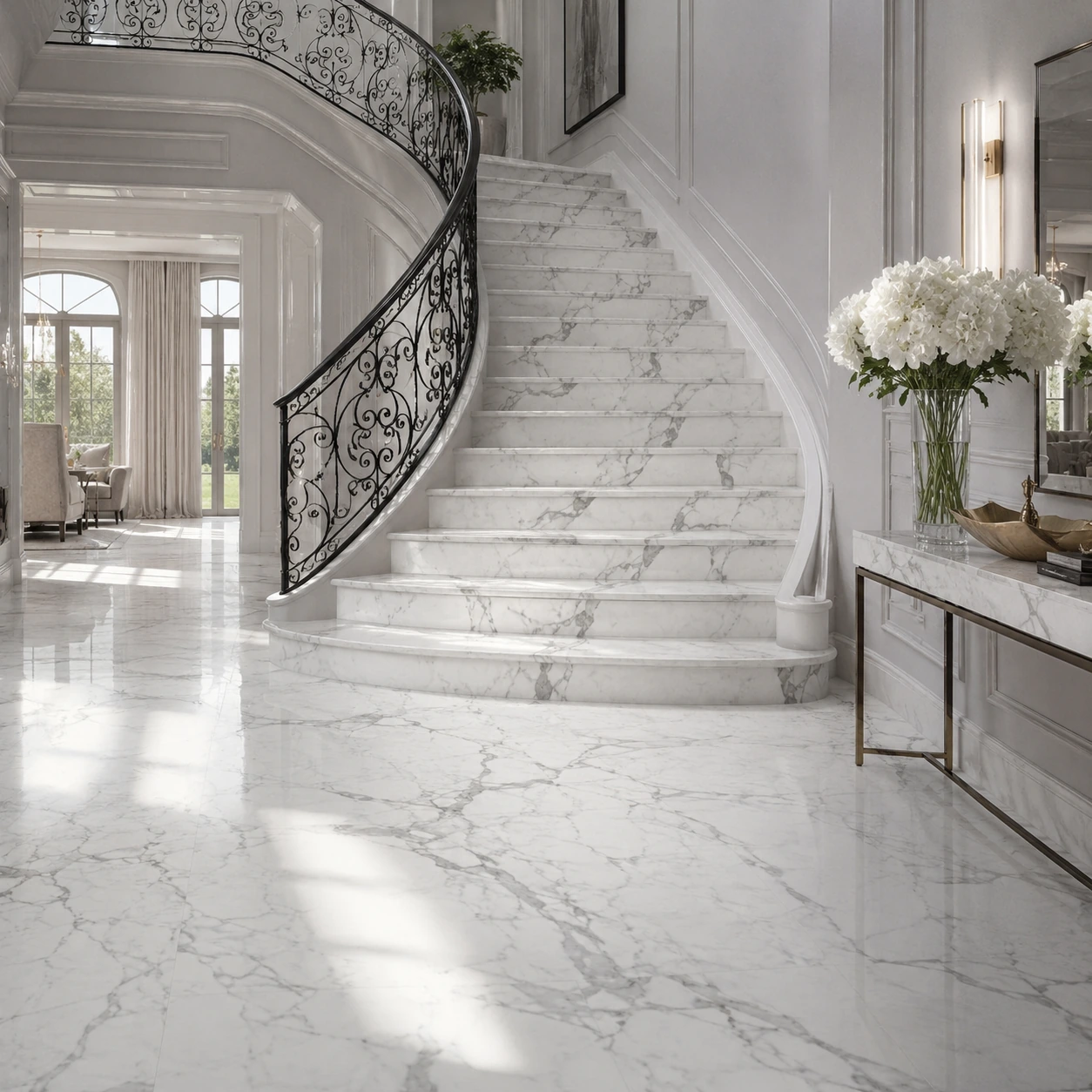
Premium white marble comparison

Statuario vs Michelangelo Marble: Differences, Price & Which One Should You Choose?

Both are premium white natural marbles used in luxury interiors, but the names are not interchangeable. This guide compares actual origin, background tone, vein movement, price, flooring suitability, bathrooms, feature walls, maintenance and the slab checks that matter before you buy.

StatuarioItalyCarrara / Apuan marble district
VS
MichelangeloVerify the lotCommercial name used for different sources
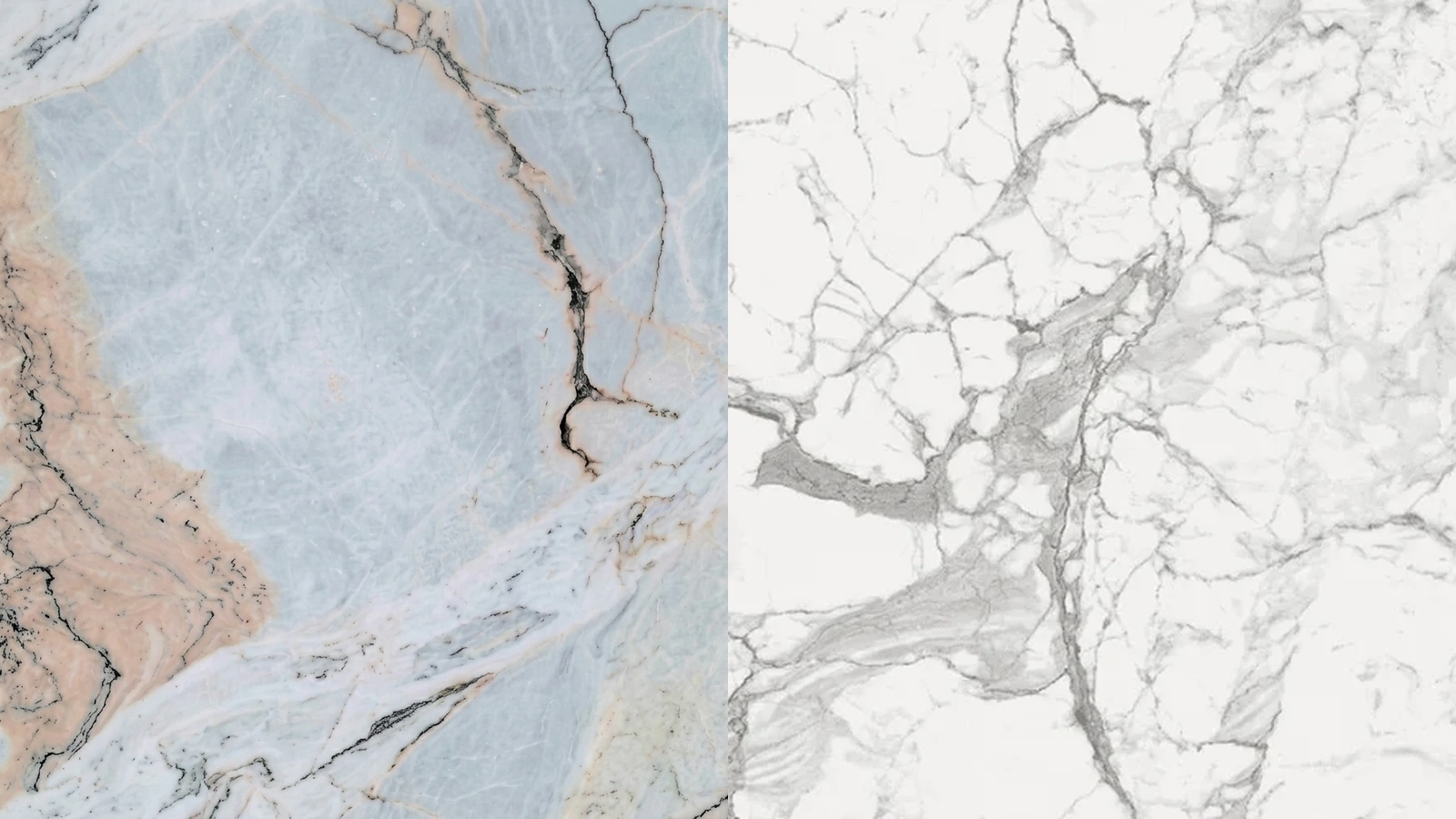
Side-by-side slab comparison of Michelangelo marble on the left and Statuario marble on the right
Real slab comparison: Michelangelo marble on the left and Statuario marble on the right. Always compare the actual lot, vein movement, thickness, repairs and usable area before finalising a premium marble order.

Direct answer

Are Statuario and Michelangelo marble the same?

No—not as a reliable buying rule. Statuario is an established Italian marble name associated with the Carrara and Apuan Alps marble district, typically recognised for a bright white background and stronger grey vein movement. Michelangelo is used as a commercial trade name in the stone market and can refer to different white-marble lots and origins. The current Michelangelo lot offered by Sudarshan Stoneix is supplied as Portugal-origin material, subject to invoice and import-document verification.

For a buyer, the safest comparison is not “which name sounds more premium?” It is: which actual slab lot gives the right origin, background, vein pattern, usable yield and landed project cost?

The naming issue buyers should understand first

Statuario and Michelangelo: The Difference Starts with Origin and Naming

Statuario

An established Carrara-area Italian marble name

Statuario is one of the best-known white marbles associated with the Carrara marble basin and Apuan Alps of Tuscany, Italy. The material is valued for a light background and distinctive grey veining. Within the market, quality still varies substantially between slabs and bundles.

  • Declared origin should be Italy and verified for the selected lot.
  • High-value lots are often selected for brightness, vein balance and matching pairs.
  • Book-matching can create strong feature walls when compatible adjacent slabs are available.
View current Statuario product details
Michelangelo

A commercial name that requires document verification

“Michelangelo”, “Michael Angelo” and similar spellings are used commercially for premium white marble. The name is not a dependable origin certificate by itself. The current Sudarshan Stoneix Michelangelo lot is offered as Portugal-origin material, so buyers should verify the invoice and import documentation for the exact lot being selected.

  • Do not assume every Michelangelo-labelled slab is Italian.
  • Compare background tone, vein movement, repairs and thickness lot by lot.
  • For large flooring, visual consistency can matter more than a dramatic trade name.
View current Michelangelo product details

Why this matters: premium marble prices are often quoted from a commercial name alone. Two slabs carrying the same name can differ in origin, whiteness, veining, structural repairs, mesh backing, thickness and usable yield. Those differences can change the real project value significantly.

Side-by-side decision table

Statuario vs Michelangelo Marble — Complete Comparison

Use this as a shortlist guide, then approve full slabs from the current stock before cutting or reserving the material.

FactorItalian StatuarioMichelangelo MarbleWhat the buyer should do
Name / classificationEstablished Italian marble trade name associated with the Carrara/Apuan districtCommercial name used inconsistently across suppliersVerify origin documents for the exact lot
Current Sudarshan lot originItaly; confirm current lot documentsPortugal; confirm invoice and import documentsDo not buy only from a catalogue name
BackgroundBright white to warm white depending on the lotWarm white to bright white depending on the lotCompare slabs under the same lighting
Vein characterOften stronger, higher-contrast grey movementOften softer, flowing grey movement in the current offered styleChoose vein intensity for the application
Best visual roleHigh-impact focal surfaces and statement interiorsCalmer premium floors and elegant large-area interiorsMatch the stone to the room, not the brand name
Book-match potentialExcellent when compatible paired slabs are availablePossible on suitable lots; depends on slab sequenceApprove adjacent slab numbers before cutting
FlooringExcellent for premium floors if vein movement suits the layoutExcellent for premium large-area flooring when the lot is visually consistentReserve one lot plus sensible wastage
Bathroom / vanityStrong statement option for walls and carefully detailed wet areasRefined option for walls, vanities and spa-like interiorsUse appropriate waterproofing, finish and sealer
Kitchen counterBoth are marble and remain sensitive to acidic spills and etchingFor hard-use Indian cooking, compare granite or quartzite too
Price logicStarts around ₹700/sq ft for selected current lots; premium matched lots can be much higherCurrent indicative range around ₹550–₹1,800/sq ft ex-KishangarhCompare actual slabs and landed scope, not the lowest headline rate

What you actually notice in a finished room

How Statuario and Michelangelo Look Different

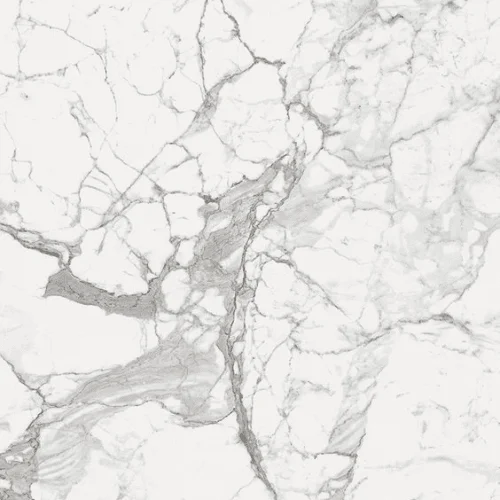
Real Italian Statuario marble slab with bright white background and bold grey veining

Statuario: Stronger visual contrast

Choose Statuario when the marble itself should become a focal element. A brighter field with more assertive grey veins works especially well on book-matched walls, double-height spaces, hotel lobbies, luxury bathrooms and selected floor zones.

Best design direction: bold, architectural, high-contrast, statement-led.
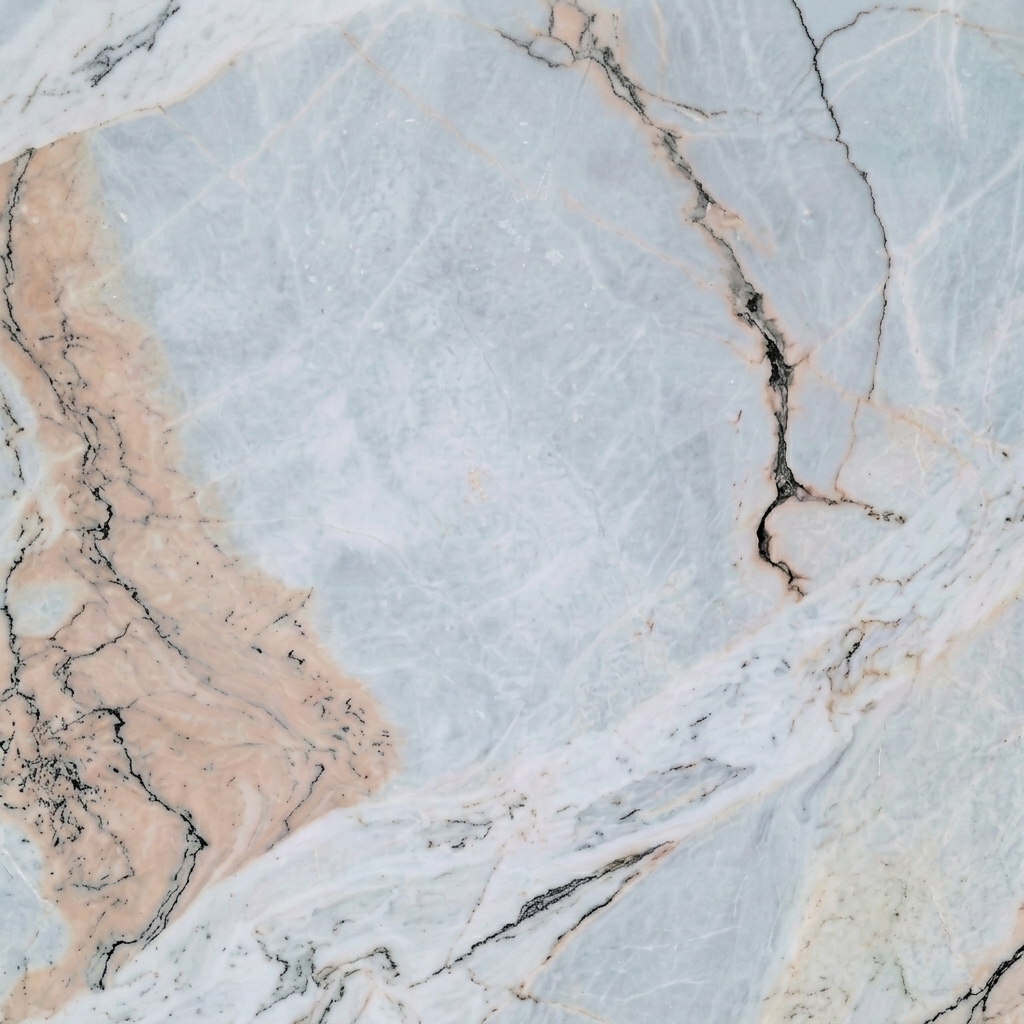
Real Michelangelo marble slab with soft flowing grey and warm mineral movement

Michelangelo: Softer visual rhythm

The current Sudarshan Michelangelo description focuses on a warm-to-bright white background with softer, flowing grey movement. This can be easier to use across larger floor areas where the objective is calm luxury rather than a dramatic wall composition.

Best design direction: refined, balanced, calm, large-area premium interiors.

Do not compare from edited close-up photos

1

Ask for a full-slab front photo, not only a polished detail shot.

2

Ask for a slow video under natural or neutral light to judge background tone.

3

Request adjacent slab numbers when planning matched walls or large floors.

4

Inspect repairs, mesh, resin, fissures and damaged edges before calculating usable yield.

India buying guide

Statuario vs Michelangelo Marble Price in India

Natural marble does not have one permanent nationwide rate. Prices move with the slab lot, grade, size, thickness, vein quality, repairs, quantity and processing. Use current ranges only as a planning reference.

Italian Statuario
From about ₹700/sq ft Selected current lots, ex-Kishangarh

Premium white backgrounds, desirable vein distribution, clean usable slabs and compatible book-match pairs can command substantially higher rates.

Check current Statuario details
Michelangelo
About ₹550–₹1,800/sq ft Current indicative ex-Kishangarh material range

The final quote depends on the exact Portugal-origin lot currently offered, background quality, slab size, measured thickness, usable area and project processing.

Check current Michelangelo details

Why one slab can cost much more than another

Background quality

Brightness, warmth, cloudiness and overall visual cleanliness.

Vein composition

Balance, direction, spacing and suitability for the intended layout.

Dimensions & thickness

Large usable slabs and verified thickness can change the rate.

Repairs & usable yield

Fissures, resin, mesh and broken edges affect how much material is actually usable.

Matched slab sequence

Compatible consecutive slabs can be more valuable for book-match work.

Processing & logistics

Cutting, edge work, stairs, panels, packing, GST, freight and unloading add to landed cost.

Room-by-room comparison

Which Marble Is Better for Flooring, Walls, Bathrooms and Stairs?

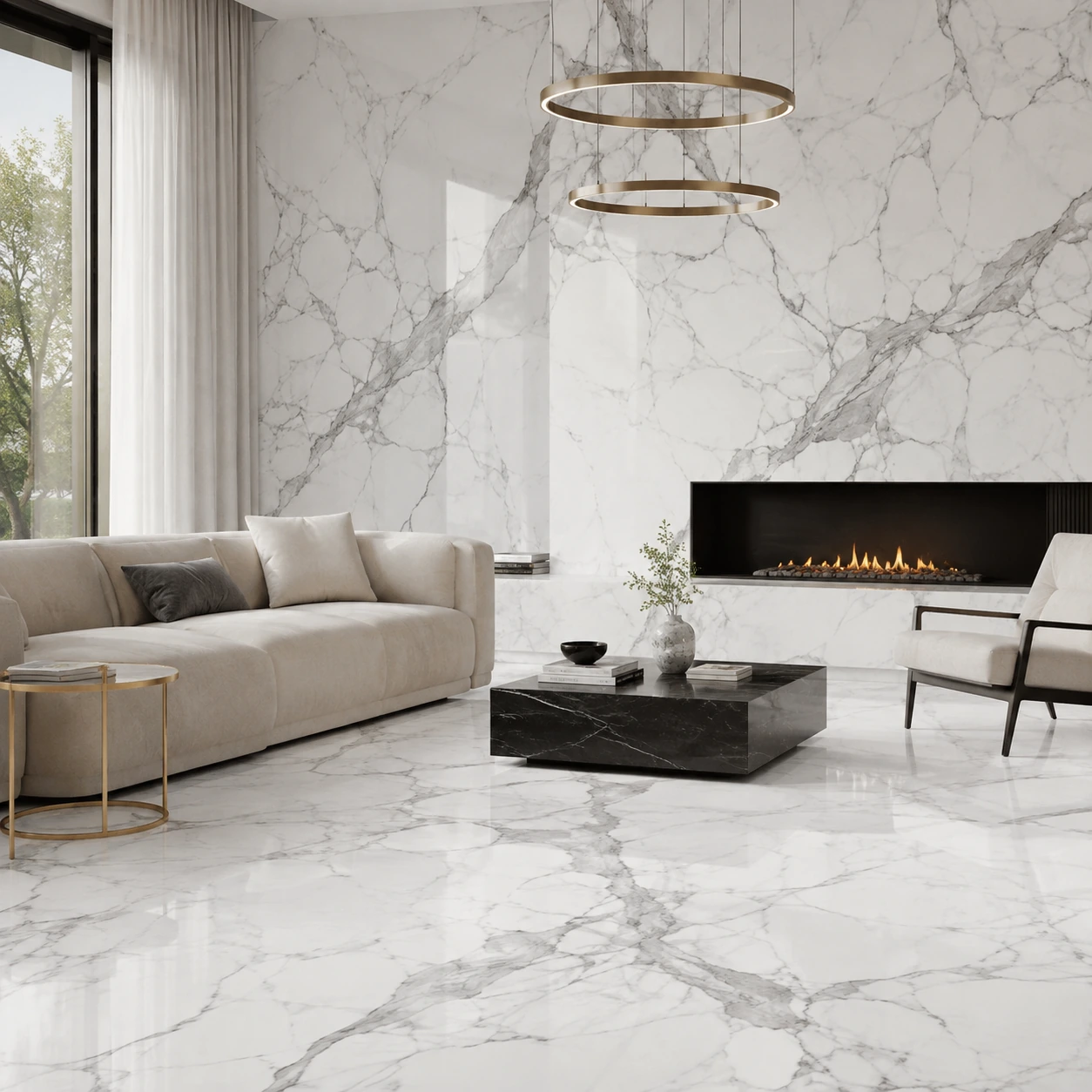
Living-room flooring

Michelangelo for calmer continuity

For a large floor, a softer and more repeatable vein rhythm can be easier to balance. Statuario can still work beautifully if the selected lot has controlled movement and enough matching material.

Feature wall

Statuario for stronger impact

Bold grey movement makes Statuario especially effective on statement walls, book-matched panels, reception backgrounds and double-height spaces.

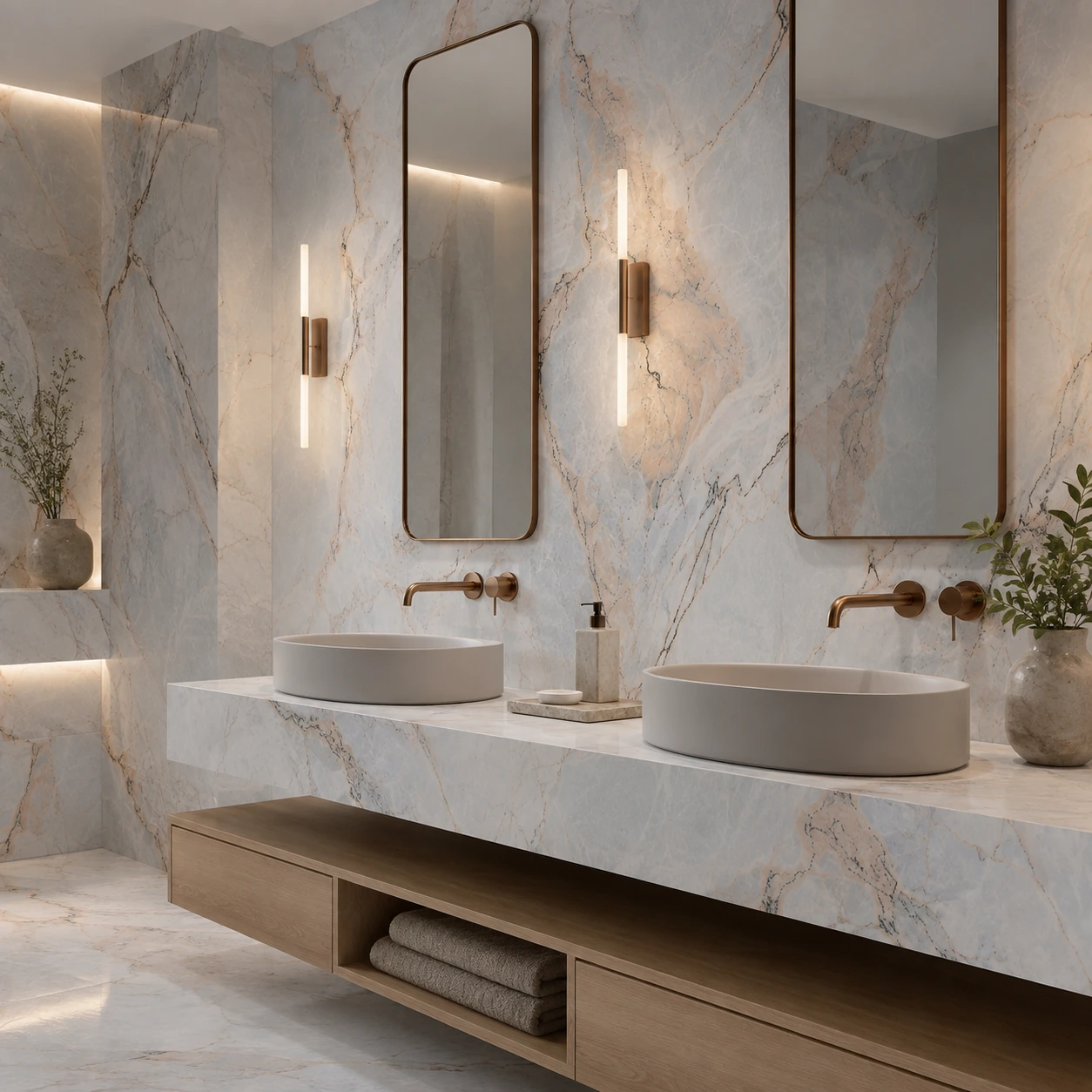
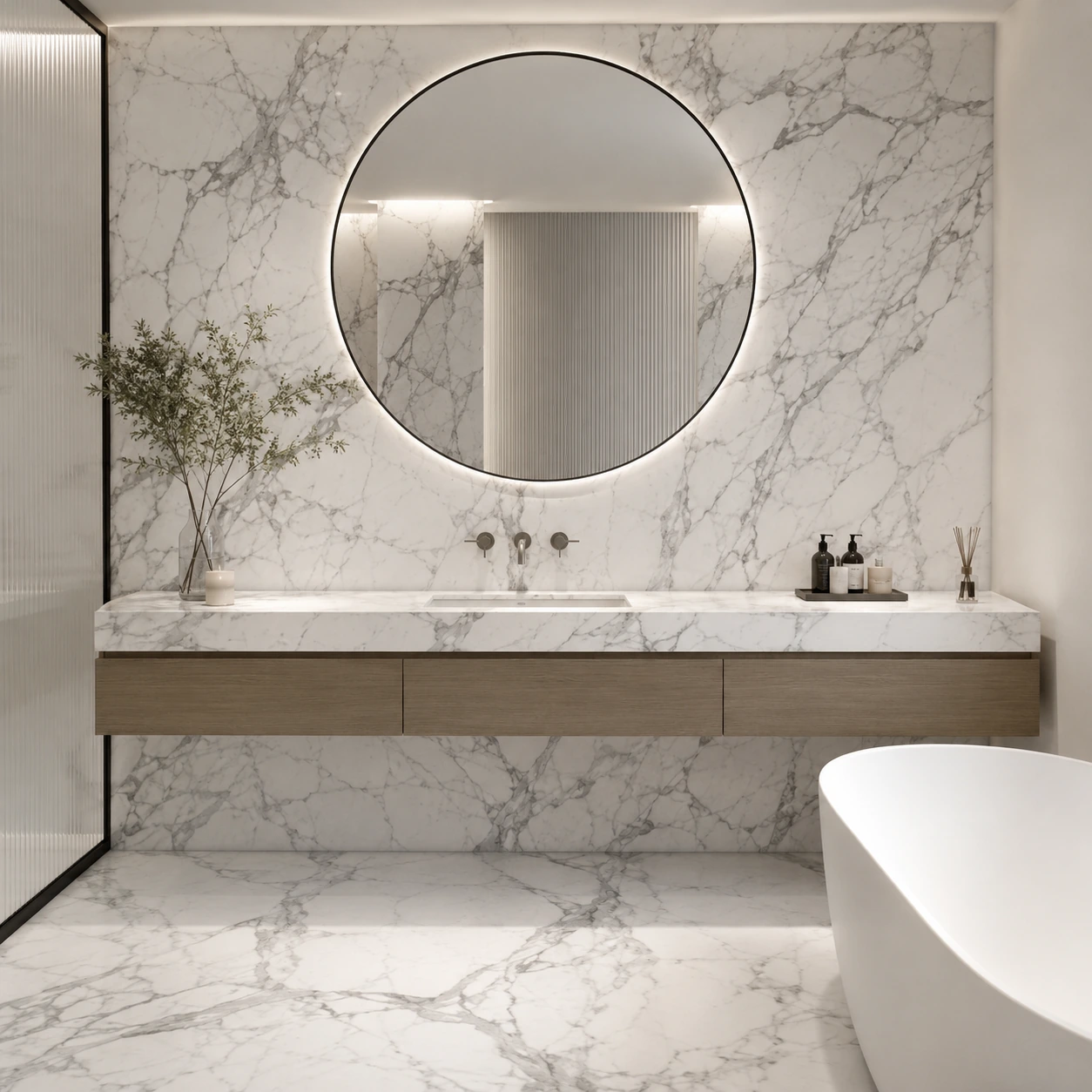
Bathroom

Both work

Statuario delivers a higher-contrast hotel look; Michelangelo can feel calmer and warmer. In wet floor zones, use a suitable finish and professional waterproofing detail.

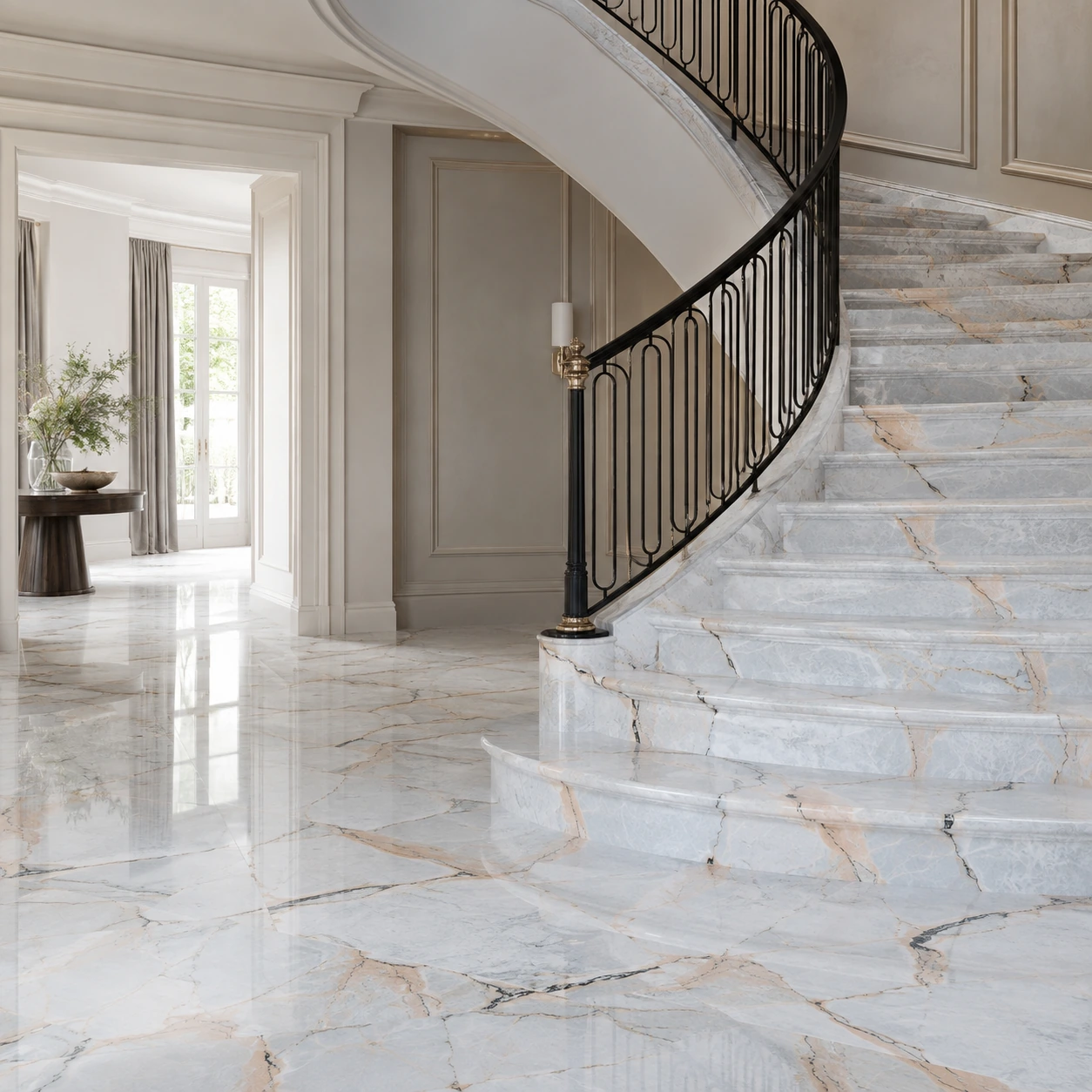
Staircase

Choose the better slab lot

Both can be fabricated into treads, risers and landings. Vein direction, edge strength, thickness and nosing detail are more important than the name alone.

Hotel / lobby

Statuario for a focal luxury statement

Where the stone needs to read clearly from a distance, stronger Statuario movement often creates more visual presence.

Kitchen countertop

Compare alternatives too

Both are calcitic marbles and can etch from lemon, vinegar and other acids. For a heavily used Indian cooking counter, granite or quartzite may be easier to maintain.

Simple project decision guide

Statuario or Michelangelo — Which One Should You Buy?

Choose Statuario when...
  • You want a clearly Italian Carrara-area stone with current origin documentation.
  • Your design needs bolder grey veins and stronger white-grey contrast.
  • You are creating a book-matched wall, double-height panel or statement lobby.
  • You are comfortable selecting a premium lot where matching and rarity may increase the cost.
Explore Italian Statuario
Choose Michelangelo when...
  • You prefer softer, more flowing grey movement for large interior surfaces.
  • You want a refined white imported marble for luxury flooring, bathrooms, stairs or walls.
  • You are comfortable verifying the actual origin instead of assuming it from the trade name.
  • The current slab lot gives you better visual consistency and usable yield for your project.
Explore Michelangelo marble
Best overall rule: there is no universal winner. Statuario wins when bold Carrara character and book-match impact are the priority. Michelangelo can be the better choice when the actual selected lot gives softer movement, stronger large-floor continuity or better project value.

Before paying the advance

Seven Checks Before Buying Either Marble

1

Origin documents: verify the invoice and available import paperwork for the selected lot.

2

Full slabs: approve complete slab photos and video, not only a sample or close-up image.

3

Measured thickness: ask for actual measurements at multiple points.

4

Structural condition: inspect fissures, repairs, mesh, resin and edge damage.

5

Usable yield: calculate how much of the slab can actually be used after layout and cutting.

6

Lot reservation: reserve the full matching quantity plus sensible wastage before processing.

7

Landed quote: separate material, fabrication, packing, GST, freight and unloading.

Buyer questions

Statuario vs Michelangelo Marble FAQs

Is Statuario the same as Michelangelo marble?

No. Statuario is an established Italian marble name associated with the Carrara/Apuan marble district. Michelangelo is used as a commercial trade name and may be applied to different white-marble sources. Verify the origin documentation for the actual lot you are buying.

Where does Statuario marble come from?

Genuine Italian Statuario is associated with the Carrara and Apuan Alps marble district in Tuscany, Italy. For any purchase, confirm the origin paperwork for the selected slab lot.

Where does Michelangelo marble come from?

The name Michelangelo is used inconsistently in the commercial stone market, so the name alone should not be treated as proof of country of origin. The current Michelangelo lot offered by Sudarshan Stoneix is supplied as Portugal-origin material, subject to invoice and import-document verification.

Which is more expensive, Statuario or Michelangelo?

There is no permanent winner because natural-marble pricing is lot specific. Current Sudarshan Statuario selections start near ₹700/sq ft, while the current Michelangelo planning range is approximately ₹550–₹1,800/sq ft ex-Kishangarh. Premium Statuario matched slabs can cost substantially more. Compare the actual slabs, usable area and landed project scope.

Which is better for living-room flooring?

Michelangelo can work especially well when the selected lot has softer, repeatable vein movement across a large floor. Statuario is also excellent, but very dramatic veins may require more careful dry layout and slab sequencing. Choose from the actual lot rather than the name alone.

Which is better for a book-matched feature wall?

Statuario is often preferred when bold grey veins and high contrast are the design goal. The deciding factor is whether compatible adjacent slabs are available that create a convincing mirrored or continuous composition.

Can Statuario and Michelangelo marble be used in bathrooms?

Yes. Both can be used for bathroom walls, vanity tops and suitable floor zones. Waterproofing, drainage, joint detailing, a slip-conscious floor finish and marble-safe cleaners are important. Seal according to the selected stone, finish, traffic and sealer instructions.

Can either marble be used for kitchen countertops?

Yes, but both remain marble and are vulnerable to acid etching from lemon, vinegar, tamarind and similar spills. For a heavily used Indian cooking surface, compare granite or quartzite before deciding. Marble works better when the owner accepts its natural patina and maintenance requirements.

How can I identify the better slab before buying?

Compare full-slab background tone, vein balance, repaired areas, mesh or resin, edge condition, measured thickness, flatness and usable yield. For walls or large floors, also check the sequence of adjacent slabs and reserve the complete matching quantity before cutting.

How this comparison was prepared

Slab-First, Document-First Buying Guidance

This comparison uses the current Sudarshan Stoneix Statuario and Michelangelo product information, including current lot-origin wording and price guidance, together with established Carrara-marble references. Because natural-stone names and stock change by lot, the page intentionally avoids treating a commercial name as a substitute for origin documentation or actual slab inspection.

Compare the actual slabs

See Statuario and Michelangelo Side by Side Before You Decide

Share your project area, city, application and preferred vein style. Request current full-slab videos, origin details, available dimensions, processing options and a dated delivered quotation.

Shopping Cart
Scroll to Top